Unlocking the Spooky Charm of Haunted Ravine: A Deep Dive into Vintage Gothic Typography
In the vast landscape of digital design, few things capture attention quite like a font that tells a story before a single word is read. When you need to evoke a sense of history, mystery, or sheer unease, standard sans-serifs simply won’t cut it. This is where Haunted Ravine steps onto the stage, offering a visual experience that is as captivating as it is eerie. Designed with a distinct vintage charm, this blackletter typeface bridges the gap between medieval manuscripts and modern Halloween aesthetics, making it a versatile tool for designers who want to add weight and atmosphere to their projects.
Whether you are crafting a poster for a local haunted house tour, designing album art for a gothic metal band, or simply looking to add a touch of old-world intrigue to a wedding invitation (for the alternative crowd), understanding the nuances of Haunted Ravine is essential. It isn’t just about picking a "scary" font; it’s about selecting a typographic voice that resonates with your audience on a primal level.
The Anatomy of Eerie Elegance
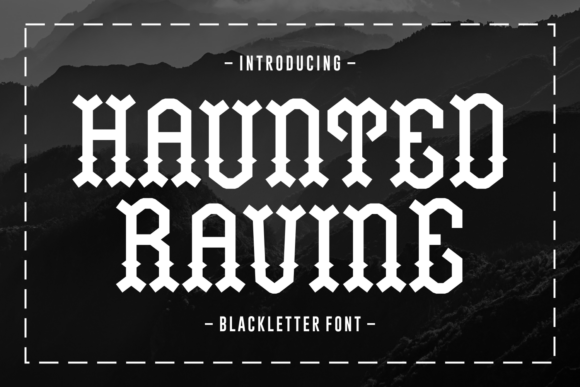
To truly appreciate Haunted Ravine, one must look past its initial shock value and examine its structural integrity. At first glance, the font appears chaotic, but a closer inspection reveals a meticulously crafted system of bold, intricate letters. The blackletter style—often referred to as Gothic script—is characterized by its dense, angular forms that mimic the handwriting of medieval scribes. However, Haunted Ravine modernizes this aesthetic by exaggerating certain elements to create a more dramatic, almost theatrical effect.
The letters are not merely tall and thin; they possess a heavy, grounded presence. The serifs are sharp and jagged, resembling thorns or broken stone, which contributes to the font's mysterious aura. This intricacy serves a dual purpose: it draws the eye in, inviting the viewer to decipher the text, while simultaneously creating a texture that feels ancient and worn. For designers, this means that Haunted Ravine can function as both a headline and a decorative element, adding depth to layouts without requiring additional graphic overlays.
Furthermore, the font’s classic look ensures that it doesn’t feel like a cheap novelty item. While many horror-themed fonts rely on excessive blood splatters or distorted shapes, Haunted Ravine maintains a level of typographic dignity. It respects the rules of letterform construction even while bending them for artistic effect. This balance makes it suitable for a wider range of applications than you might expect, from legitimate historical recreations to purely fictional, supernatural themes.
Practical Applications in Modern Design
One of the most common questions designers ask when considering a specialized font like Haunted Ravine is: "Where does this actually fit in my workflow?" The answer is surprisingly broad. While the immediate association is with Halloween, the font’s versatility extends far beyond October 31st.
- Event Marketing: For haunted attractions, escape rooms, or mystery dinner theaters, Haunted Ravine sets the tone instantly. It signals to the customer that they are about to experience something immersive and slightly dangerous. Using this font on flyers, ticket stubs, or social media banners creates an immediate expectation of thrill.
- Music and Entertainment: In the music industry, particularly within genres like metal, punk, and industrial, typography is a key part of the brand identity. Album covers, concert posters, and merchandising often utilize Haunted Ravine to convey aggression, darkness, or retro-cool vibes. Its bold strokes reproduce well on t-shirts and vinyl sleeves, ensuring legibility even at small sizes.
- Gothic and Alternative Fashion: Brands targeting niche subcultures often lean into historical aesthetics. Haunted Ravine works beautifully for clothing labels, boutique signage, and lookbooks that aim to evoke a Victorian or Edwardian sensibility mixed with modern edge.
- Digital Content Creation: YouTubers and streamers focused on true crime, paranormal investigation, or horror movie reviews frequently use this font for their thumbnails and channel branding. It stands out against busy backgrounds and immediately categorizes the content for the viewer.
It is important to note that while Haunted Ravine is powerful, it is not a body text solution. Its intricate nature makes it difficult to read in long paragraphs. Instead, think of it as a spotlight. Use it for titles, quotes, headers, and short phrases. Let it shine, and let simpler, cleaner fonts handle the detailed information. This contrast enhances readability and ensures that the spooky aesthetic doesn’t overwhelm the user experience.
Considerations for Implementation
Adopting any unique typeface requires careful planning. With Haunted Ravine, the primary consideration is context. Because the font carries such strong connotations, using it inappropriately can lead to confusion or unintended humor. For instance, using it for a corporate annual report or a children’s birthday party invitation would likely clash with the desired message. The font demands a specific mood—one of seriousness, mystery, or playful spookiness.
Another factor to consider is pairing. Since Haunted Ravine is visually heavy and complex, it needs a partner that can provide balance. Clean, geometric sans-serifs or simple serif fonts work best. The simplicity of the companion font allows the Haunted Ravine to take center stage without creating visual noise. Imagine a layout with a Haunted Ravine header followed by a crisp Helvetica description. The juxtaposition highlights the ornate nature of the title while keeping the information accessible.
Licensing and availability are also practical concerns. As a specialized font, ensure that you have the proper rights to use Haunted Ravine for your intended project, whether it is personal or commercial. Many designers find themselves frustrated when they discover that a free download lacks commercial usage rights. Always check the license agreement. If you are working on a large-scale commercial campaign, investing in a premium license can protect your brand from legal issues down the line.
Why Choose Haunted Ravine Over Alternatives?
The market is saturated with gothic and blackletter fonts. So, why choose Haunted Ravine? The answer lies in its specific character and charm. Some blackletter fonts are too rigid, feeling like academic reproductions of historical documents. Others are too messy, lacking clarity. Haunted Ravine hits a sweet spot. It feels authentic yet designed for contemporary eyes. The "vintage charm" mentioned in its description isn't just a marketing buzzword; it refers to the way the font ages well in digital environments. It retains its legibility on screens while still offering the tactile feel of ink on paper.
Moreover, the font’s ability to evoke emotion is unmatched. Words written in Haunted Ravine don't just convey information; they convey feeling. A title like "Whispers in the Dark" takes on a completely different weight when rendered in this typeface compared to a standard Arial. It becomes an invitation into a world of secrets and shadows. For creators who want their typography to do the heavy lifting of storytelling, Haunted Ravine is an invaluable asset.
In conclusion, Haunted Ravine is more than just a font; it is a stylistic statement. It offers a blend of historical reverence and modern flair that is perfect for anyone looking to inject a bit of the macabre into their designs. By understanding its strengths, limitations, and ideal use cases, you can harness its power to create compelling, memorable visuals that resonate with your audience. Whether you are decorating a spooky cave or designing a high-end brand identity, Haunted Ravine provides the eerie elegance needed to make your project stand out in a crowded digital world.