Emperion Font Review: Balancing Gothic Charm with Whimsical Detail
Selecting the right typography is rarely a simple task. It requires balancing legibility, aesthetic appeal, brand alignment, and technical functionality. Among the myriad of display fonts available today, Emperion has carved out a distinct niche by merging the authoritative weight of classic blackletter with unexpected, playful details. For designers, event planners, and creative professionals evaluating typefaces for specific projects, understanding the nuances of Emperion is crucial to determining whether its unique character serves the intended message or detracts from it.
This analysis explores what makes Emperion distinct, how it compares to traditional gothic and decorative serif options, and the practical considerations involved in using this font for invitations, logos, and branding materials. By examining its strengths, limitations, and ideal use cases, readers can make an informed decision about incorporating Emperion into their visual vocabulary.
Deconstructing the Design: What Makes Emperion Distinct?
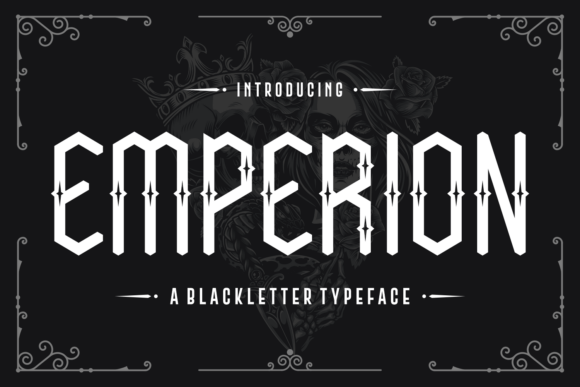
To evaluate any typeface effectively, one must first understand its structural DNA. Emperion is fundamentally rooted in the blackletter tradition—a style characterized by dense vertical strokes, sharp angles, and a high-contrast appearance that evokes medieval manuscripts and old-world elegance. However, Emperion does not stop at historical replication. Its defining feature is the inclusion of small stars nestled within the negative space and lines of each letterform.
This design choice introduces a layer of whimsy that disrupts the stern formality typically associated with gothic scripts. The stars act as micro-details that reward close inspection, adding a sense of magic or festivity without compromising the overall readability of the wordmark. This duality—classic charm meeting modern playfulness—is the primary value proposition of the font. It allows designers to evoke a sense of heritage while simultaneously signaling creativity and approachability.
- Visual Rhythm: The star accents create a subtle texture that adds depth to large-scale applications like headers or posters.
- Tonal Flexibility: The font can read as either formal or festive depending on the surrounding layout and color palette.
- Historical Reference: It retains the gravitas of calligraphy, making it suitable for contexts requiring a touch of sophistication.
Comparative Analysis: Emperion vs. Traditional Blackletter
When considering Emperion, it is helpful to compare it against two broader categories: strict historical blackletter fonts (such as Fraktur or Textura) and modern decorative serifs. Understanding these distinctions clarifies where Emperion fits in the typographic landscape.
Strict Historical Blackletters
Traditional blackletter fonts are often dense, dark, and difficult to read at small sizes. They convey authority, history, and sometimes even intimidation. While excellent for headlines related to heritage brands, beer labels, or fantasy themes, they can feel overly heavy or inaccessible for general communication. Emperion offers a lighter alternative. By breaking up the solid black forms with star-shaped cutouts or additions, it reduces visual weight and increases airiness. This makes Emperion more versatile for contemporary designs that require a gothic feel but lack the need for extreme historical accuracy.
Modern Decorative Serifs
Many modern decorative fonts prioritize trendiness over timelessness. They may feature quirky ligatures, exaggerated swashes, or unconventional spacing. Emperion differs by grounding its whimsy in a structured framework. The underlying skeleton of the letters remains disciplined and proportional, ensuring that the font does not appear chaotic or childish. This balance makes Emperion a safer choice for professional environments where "fun" needs to be tempered with "trustworthy."
Practical Applications and Best-Fit Scenarios
The utility of a font is determined by its context. Emperion shines in scenarios where the goal is to capture attention through elegance while maintaining a sense of wonder. Below are specific use cases where this typeface demonstrates its strongest capabilities.
Event Invitations and Stationery
Weddings, gala dinners, and themed parties often seek typography that feels celebratory yet refined. Emperion’s star motif naturally aligns with evening events, celestial themes, or holiday celebrations. For a wedding invitation, the font can serve as a striking header for the couple’s names, while body text should remain in a simpler sans-serif or serif to ensure guests can easily read logistical details. The contrast between the ornate Emperion and clean supporting type creates a sophisticated hierarchy.
Logo Design and Brand Identity
For businesses aiming to project a blend of tradition and creativity, Emperion can be an effective logo element. Think of boutique bakeries, artisanal candle makers, or creative agencies specializing in storytelling. The stars add a memorable hook that aids in brand recall. However, caution is advised when scaling the logo down. At very small sizes, such as on business cards or mobile app icons, the star details may blur or disappear, reducing the font’s impact. In these instances, a simplified version or a different typeface might be necessary.
Creative Projects and Editorial Design
In magazine layouts, book covers, or promotional banners, Emperion can act as a focal point. It works particularly well for titles related to mythology, astronomy, history, or fantasy genres. The font’s ability to carry narrative weight makes it a powerful tool for capturing reader interest before they even begin reading the content.
Evaluating Tradeoffs and Limitations
No typeface is a universal solution. Recognizing the limitations of Emperion is just as important as acknowledging its strengths. Designers must weigh several factors before committing to this font for a long-term project.
- Legibility Constraints: Due to its decorative nature, Emperion is not suitable for body copy. Using it for paragraphs of text will fatigue the reader and obscure meaning. It should be reserved for display purposes only—headlines, subheads, and short phrases.
- Niche Appeal: The whimsical stars may not align with every brand voice. A corporate law firm, a medical clinic, or a minimalist tech startup might find the font too ornate or distracting. In these contexts, the lack of seriousness could undermine credibility.
- Variety Availability: Depending on the foundry, blackletter fonts often have limited weights and styles. If a project requires bold, italic, and light variations for consistent hierarchy, Emperion might not offer enough flexibility compared to a more comprehensive type family.
Decision Factors: When to Choose Emperion
Ultimately, the decision to use Emperion depends on the specific goals of the project. Consider asking the following questions during the evaluation phase:
- Does the brand need to feel magical or festive? If the answer is yes, the star details reinforce this emotional connection.
- Is the text primarily used for short, impactful statements? Emperion excels in brevity, allowing the eye to appreciate the intricate details of each letter.
- Can we pair it with complementary typefaces? Successful implementation usually involves pairing Emperion with neutral, highly legible fonts to balance the visual noise.
If the project demands strict neutrality, maximum accessibility, or extensive textual content, other options may be more appropriate. However, if the aim is to create a memorable, elegant, and slightly enchanting visual identity, Emperion offers a compelling blend of structure and soul.
Conclusion
Typography is a language of its own, and choosing the right voice is essential for effective communication. Emperion stands out as a specialized tool in the designer’s kit—one that bridges the gap between historical reverence and modern whimsy. Its distinctive star-accented letters provide a unique aesthetic that can elevate invitations, logos, and creative projects when used judiciously.
By understanding its place relative to traditional blackletters and modern decorators, designers can leverage Emperion’s strengths while avoiding its pitfalls. Whether used for a single headline or as part of a broader brand system, Emperion proves that classic forms can still hold room for playful innovation. For those seeking a typeface that balances elegance with a hint of magic, Emperion is a worthy candidate for serious consideration.