Evaluating Bassk: A Practical Look at This Blackletter Typeface for Modern and Historic Design
Selecting the right typeface is rarely a purely aesthetic decision; it is a strategic choice that influences readability, brand perception, and user experience. Among the vast library of available fonts, Bassk occupies a distinct niche. It is a clean, simple blackletter font that bridges the gap between traditional calligraphy and modern graphic design requirements. For designers, developers, and content creators evaluating typography options, understanding where Bassk fits within the broader landscape of serif and display fonts is essential.
This evaluation explores the visual characteristics of Bassk, its functional capabilities, and how it compares to other typographic approaches. The goal is to provide a balanced perspective on when this font serves as an optimal solution and when alternative styles might better serve specific project needs.
Visual Identity and Structural Characteristics
Blackletter typefaces, often referred to as Gothic or Old English, have historically been associated with medieval manuscripts and formal certificates. They are characterized by dense, vertical strokes and sharp angles. However, not all blackletter fonts are created equal. Many traditional examples suffer from poor legibility at small sizes or create visual fatigue due to their heavy ink traps and complex internal structures.
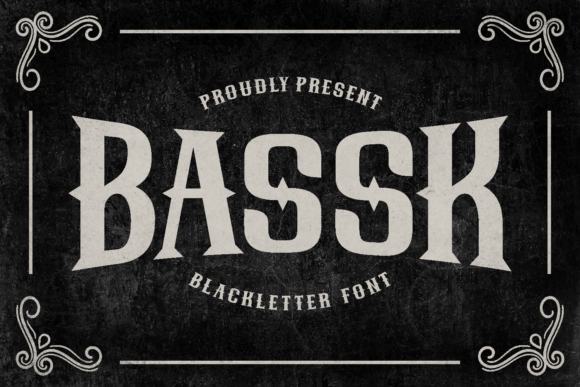
Bassk distinguishes itself by prioritizing clarity without sacrificing historical flavor. Its design features bold lines and sharp edges, which give it a strong, vintage look. Yet, unlike more ornate competitors, Bassk strips away unnecessary flourishes. This "clean" approach means that while the font retains the authoritative weight of classic blackletter, it does so in a way that feels accessible rather than archaic.
The contrast between the thick vertical stems and the thinner diagonal serifs creates a rhythm that is visually engaging. This structure allows Bassk to command attention in headlines while maintaining enough openness to remain readable in short body text contexts, provided the sizing is appropriate. The sharp edges contribute to a sense of precision and craftsmanship, making it particularly effective for brands that wish to convey heritage, stability, or artisanal quality.
Comparing Bassk to Traditional and Modern Alternatives
When evaluating Bassk, it is helpful to place it alongside two broad categories of typography: traditional blackletters and modern geometric sans-serifs. Each category offers different tradeoffs regarding tone, readability, and versatility.
Tone and Atmosphere
Traditional blackletter fonts (such as Cloister Black or Old English Text) often evoke a sense of formality, religious significance, or extreme antiquity. They can feel intimidating or difficult to parse for general audiences. In contrast, Bassk softens these associations. Its simplicity makes it feel more contemporary and friendly, suitable for craft breweries, boutique hotels, or lifestyle brands that want to reference history without appearing stuffy.
Conversely, modern sans-serif fonts prioritize neutrality and speed of reading. While they excel in digital interfaces and technical documentation, they lack the distinctive character that Bassk provides. If a project requires a unique visual identity that stands out immediately, Bassk offers a level of personality that neutral sans-serifs cannot match.
Readability and Legibility
One of the primary criticisms of blackletter typefaces is their low legibility in extended passages. Bassk addresses this through its open counters (the enclosed spaces within letters like 'e' or 'a') and consistent stroke width. However, it still remains a display-oriented font. When comparing Bassk to a standard serif like Garamond or a sans-serif like Helvetica, the latter will always win in terms of pure reading efficiency for long-form content.
Therefore, the comparison here is not about replacing body text fonts, but about selecting the right tool for hierarchy. Bassk excels in headings, logos, and pull quotes where impact is prioritized over rapid information consumption.
Strengths and Tradeoffs in Application
No single typeface is universally superior. Bassk comes with specific strengths that make it ideal for certain use cases, alongside limitations that require careful handling.
- Strong Brand Recognition: The unique shape of Bassk ensures that any logo or headline using it is instantly memorable. It cuts through visual noise in crowded markets.
- Versatility Across Eras: Despite its old-world style, Bassk works well for both modern and historic designs. This adaptability reduces the need for multiple custom type treatments.
- Emotional Resonance: It conveys trust, tradition, and solidity. For industries like law, finance, or heritage goods, this emotional cue is valuable.
However, there are tradeoffs to consider. The bold lines and sharp edges can create vibration effects if paired incorrectly with other high-contrast fonts. Additionally, because Bassk is a display font, it may not scale down effectively on low-resolution screens if used in very small sizes. Designers must weigh the aesthetic benefit against the potential cost in accessibility and usability.
Best-Fit Situations and Decision Factors
Determining whether Bassk is the right choice depends largely on the context of the design project. Below are scenarios where Bassk shines, followed by situations where another option might be preferable.
When Bassk Is the Right Choice
- Brand Identity and Logos: For businesses seeking a rugged, authentic, or heritage-driven image, Bassk provides immediate visual authority. It is particularly effective for outdoor gear companies, artisanal food producers, and craft beverage brands.
- Editorial Headlines: In magazine layouts or blog posts, Bassk can be used for section headers or drop caps to add visual interest without disrupting the flow of the main text.
- Event Posters and Invitations: The font’s dramatic flair makes it suitable for one-off print materials where readability is less critical than atmosphere.
When to Consider Alternatives
If the primary goal is maximum accessibility for users with dyslexia or visual impairments, a simpler sans-serif or humanist serif would be a more responsible choice. Similarly, if the design system requires a unified look across hundreds of pages of dense text, Bassk’s complexity would become a hindrance rather than a help.
Furthermore, in minimalist or ultra-modern design contexts, the historical weight of Bassk might clash with the intended aesthetic. In such cases, a geometric sans-serif or a light, airy serif would align better with the overall design philosophy.
Practical Implementation Tips
To get the most out of Bassk, designers should follow a few practical guidelines. First, pair it with a highly neutral companion font. A clean sans-serif or a simple slab serif can balance the intricacy of Bassk in body copy. Second, pay close attention to tracking (letter spacing). Blackletter fonts often benefit from slightly increased spacing to prevent the characters from merging into an indistinguishable block.
Third, consider color contrast. Because Bassk has bold lines, it absorbs more ink than lighter fonts. Using it on dark backgrounds with light text can sometimes cause the letters to appear thicker than intended. Testing in grayscale is a useful step to ensure the visual weight remains consistent.
Conclusion on Suitability
Bassk represents a thoughtful evolution of the blackletter genre. By simplifying traditional forms and enhancing readability, it offers a versatile tool for designers who want to inject character into their work without compromising on professionalism. It is not a universal replacement for standard body text, nor is it suitable for every brand voice. However, for projects requiring a blend of vintage charm and modern clarity, Bassk stands out as a compelling option.
Ultimately, the decision to use Bassk should be driven by the specific goals of the project. If the aim is to evoke history, strength, and craftsmanship while remaining accessible to a contemporary audience, Bassk delivers on those promises. By understanding its structural qualities and comparing it against other typographic strategies, designers can make informed choices that enhance both the beauty and functionality of their final output.